
A shelf of old books, and a fairly obvious idea.
Second Chapters is a student-run book drive in Calgary. We collect children's books people have outgrown and get them, free, to refugee and newcomer families through our partner, CIWA.
How this started
My name is Jeo Metelitsa. I'm 15, in 10th grade, and I started Second Chapters in August 2026.
It started with a shelf. I was clearing out my room and found about forty books I'd loved when I was seven and hadn't opened since. My first instinct was to throw them in a donation bin somewhere and forget about it. Instead I looked up what happens to kids who grow up without books at home, and I couldn't stop thinking about the numbers.
Here's what got me: this isn't a problem of scarcity. There is no shortage of children's books in this city. There's a shortage of movement - nobody is carrying the books from the houses that are done with them to the kids who never had them. That's not a hard problem. It's boxes, a schedule, and people willing to show up on a Saturday.
So that's what Second Chapters is, and I've kept it deliberately small. People message me, I arrange a time, and the books either come to our door or I go and get them with my mom driving. They get sorted on our kitchen table.
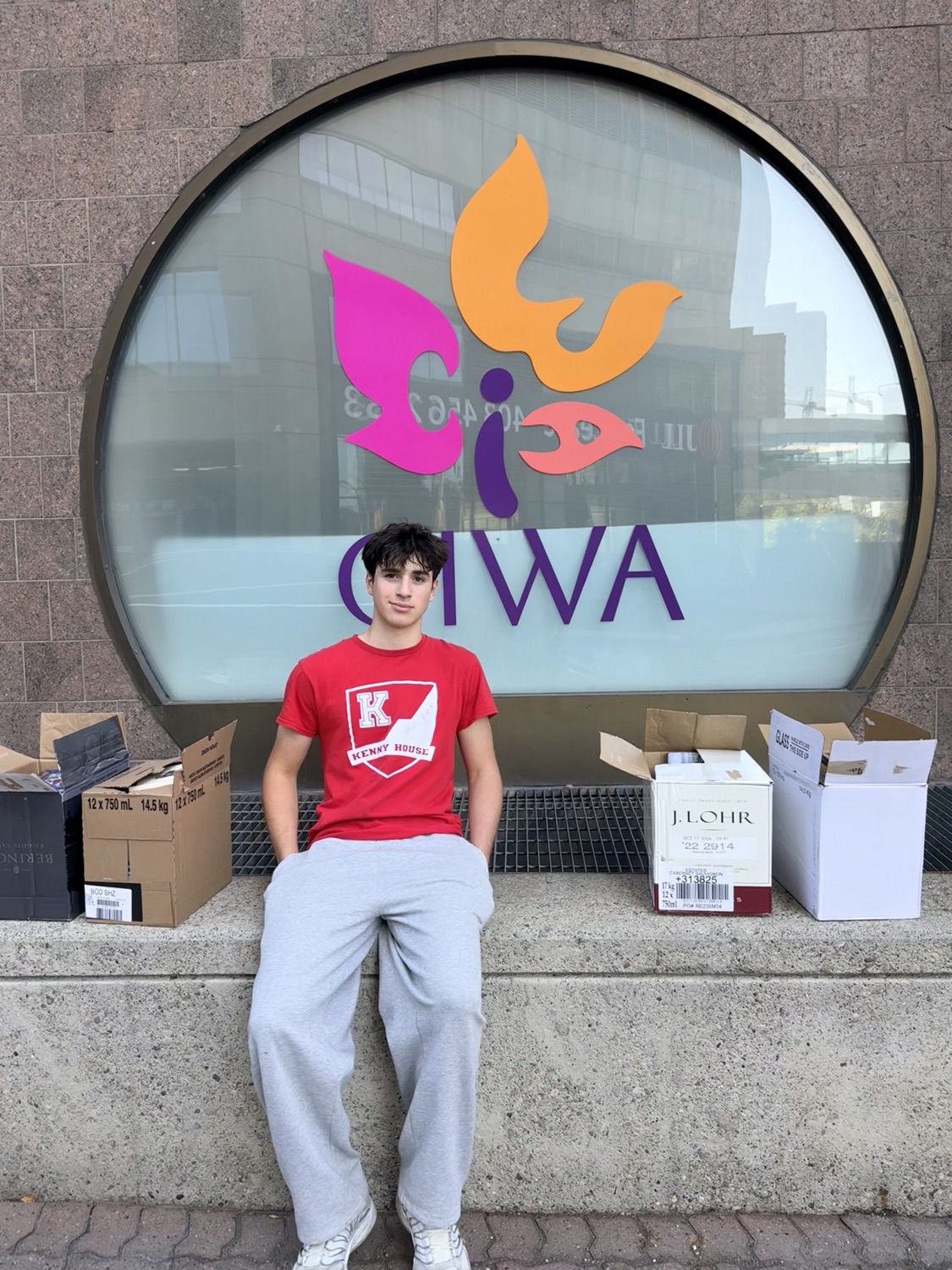
In September 2026 we partnered with CIWA, the Canadian Immigrant Women's Association, and the drive now focuses on refugee and newcomer families - the families most likely to arrive in Calgary with no children's books at all. CIWA already works with those families every day. I collect and sort the books; they get them to the kids. One goal to start: 1,000 books for 1,000 kids.
I would rather build something small and real than something impressive and imaginary. Every number on this website is the true one, including the ones that are not flattering.
Jeo Metelitsa
Founder, Second Chapters - 10th grade, Calgary
Second Chapters at a glance
| Founded | August 2026 |
|---|---|
| Founder | Jeo Metelitsa, 10th grade |
| Where | Calgary, Alberta |
| Who the books are for | Refugee and newcomer kids and their families |
| Partner | CIWA - Canadian Immigrant Women's Association |
| We collect | Children's and teen books - first-language and dual-language books most of all |
| How to donate | By arrangement - message first, no public drop boxes |
| First campaign | 1000 Books for 1000 Kids, ending June 2027 |
The two things that help most
Books your kids have outgrown - and above all, any children's books you have in a language other than English. That's genuinely the whole ask right now.
Why we picked books, of all things
Because the evidence on home libraries is unusually strong, and because books are the rare need you can meet with something people already own.
Books at home predict how far a kid goes in school
A study of more than 70,000 people across 27 countries found that children who grow up with books in the home complete about three more years of schooling than children who don't - even after controlling for their parents' education, occupation and class.
Evans, Kelley, Sikora & Treiman (2010). Family scholarly culture and educational success: Books and schooling in 27 nations. Research in Social Stratification and Mobility, 28(2).
Access is wildly unequal, block by block
Researchers surveyed every place a child could get a book in four Philadelphia neighbourhoods. In the middle-income area they counted about 13 age-appropriate books per child. In the low-income area, roughly one book for every 300 children.
Neuman & Celano (2001). Access to print in low-income and middle-income communities. Reading Research Quarterly, 36(1).
Most low-income homes have no children's books at all
Reading Is Fundamental, the largest children's literacy non-profit in the United States, reports that 61% of low-income families have no children's books in the home. Not few - none.
Reading Is Fundamental, literacy research summary.
A note on these numbers. We've cited the actual studies so you can look them up rather than taking our word for it. None of them is specifically about refugee families - we use them because the research is well-known and carefully done, and because families who have just resettled are often starting with fewer books than anyone. If you know of good research on newcomer or refugee families' access to books in Canada, send it to us and we'll add it here.
Five promises we make about every donated book
A donation is a small act of trust. These are the rules we hold ourselves to, and you can hold us to them too.
- Every book is checked by a person. No mould, no missing covers, no scribbled-out pages. If we wouldn't hand it to a kid we know, we don't hand it to a kid we don't.
- Nothing is ever sold. Not the books, not your contact information. We don't fundraise off donated books.
- Books go to refugee and newcomer families, through CIWA. Sorting happens within days, and bundles go out as soon as they're ready.
- Kids keep what they get. A book a child has to give back isn't a home library. Ours are theirs.
- Families' privacy comes first. We never publish names, photos or stories about the families who receive books.
Books we can't use
Some donated books don't make it through sorting. Rather than bin them quietly, here's what happens:
- Damaged books go to paper recycling, not landfill.
- Adult fiction and textbooks are passed to a local thrift shop or free-library box - useful, just not for the kids we serve.
- Extra copies are held for the next bundle.
What we're not
Being clear about this saves everyone time:
- Not a registered charity - we can't issue tax receipts.
- Not part of CIWA. We're an independent student drive, and CIWA is our partner.
- Not asking for money. We collect books, not donations.
- Not able to ship. We collect and deliver by hand, in Calgary.
- Not a drop-in. No boxes around town - message us and we'll arrange it.
- Not taking volunteers yet. One person doing it properly beats a team doing it badly.
The shortest version: bring us your old books.
You've read the reasoning. The part that actually moves the number is a bag of picture books in the back of a car.